Do goldfish recognize their owners?
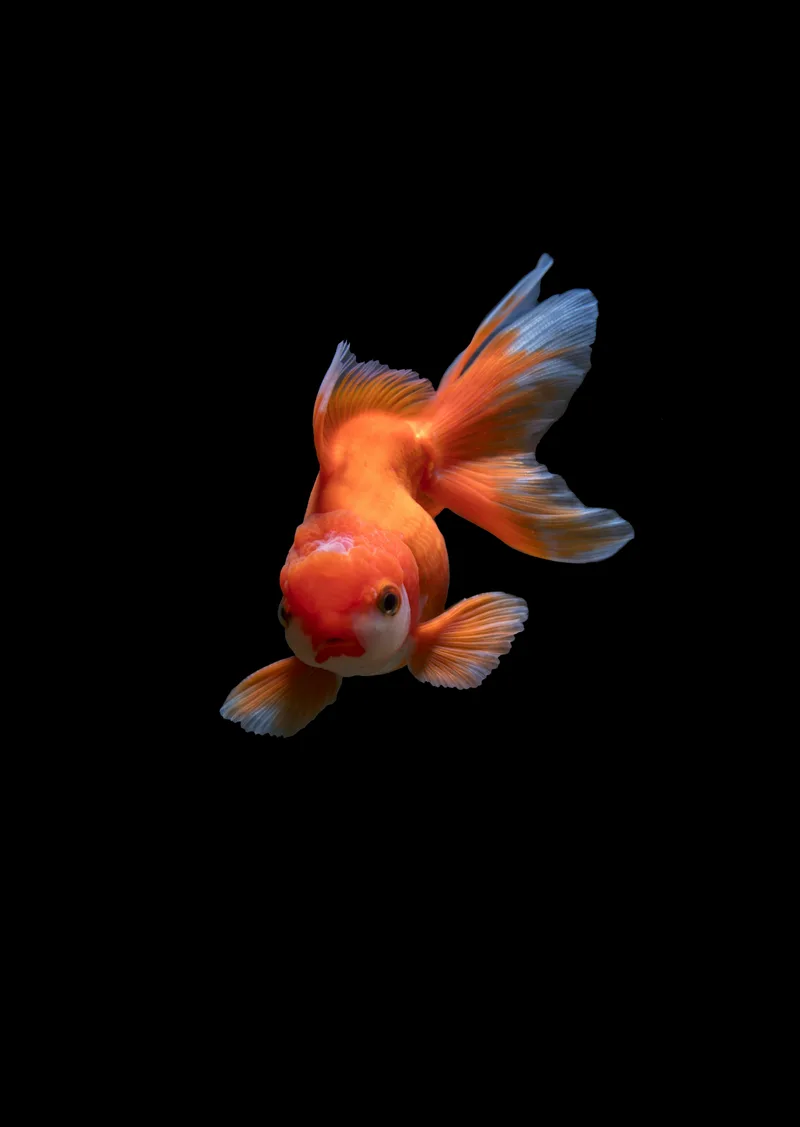
Yes. Your goldfish learns who you are, and the relationship you think you have with it is real. The way it works is a little different from how a dog or a cat knows its person. A goldfish reads you through vision and routine, not scent or voice or anything like emotional bonding. The rest of this article shows you what to watch for at your own tank, and explains how the recognition actually gets built.
What Recognition Looks Like at Your Tank
You can test most of this at home over the course of a week. The signs to look for are the ones that would be hard to explain by "food is coming" alone. If your fish is reacting to you and not just to the feeding schedule, that is recognition.
Six signs worth watching for:
- Swimming to the front when you enter the room, but not when someone unfamiliar does. The cleanest test. If your goldfish moves to the glass for you and stays low for a stranger, the response is about the person, not the feeder.
- Lining up at the usual feeding spot when you specifically approach. If your goldfish gets into position before you have touched the lid, and before anyone else in the household gets the same reaction, it is reading your approach pattern.
- Taking food from your hand while flinching from a new person's. Hand-feeding a goldfish is slow to build and fast to lose. A fish that will feed from you but not from a visitor is telling you the two of you are not interchangeable in its head.
- Tracking your finger along the glass. Slide a fingertip slowly across the front of the tank. A goldfish that knows you will often follow the motion the way a cat tracks a string. An unfamiliar person usually gets a flatter response.
- Responding to your routine. Same time of day, same side of the tank, same sequence of movements. Goldfish lock onto regular patterns fast, and that lock is part of what recognition is made of.
- Dialing back when someone else takes over for a week. Go away and let a housemate feed the tank, and you may come back to a fish that has been less active and slower to come up for food. Often the clearest sign that the routine it had built was about you specifically.
If you run through this list and your goldfish is not reacting at all, the cause is usually something other than a recognition gap. Watching for the early signs of a stressed goldfish is a better starting point than assuming the relationship is one-sided.
How Can Goldfish Tell People Apart?
Goldfish have better vision than their reputation suggests. They see color across a wider range than humans do, including some ultraviolet, and they read shape and movement well enough to distinguish one familiar silhouette from another. Their lateral line, the row of sensory pores running along each flank, picks up pressure changes from footsteps, a hand entering the water, a body moving past the glass.
A goldfish watching the same person walk up to its tank every morning is stacking up a consistent bundle of cues: the angle you come from, the rough outline of your body, the color of what you usually wear, the time of day the light in the room changes as you walk in. None of these are unique on their own. Together they form a pattern reliable enough to tell you apart from the rest of the household. Researchers at the Rochester Institute of Technology have trained goldfish to tap specific shapes for food rewards, which shows that the cognitive toolkit for picking a familiar visual target out of a background is already there.
Food does help build the recognition. Your fish learns that a particular human shape at the front of the tank means breakfast, and that learning happens fast. But food is the glue, not the whole picture. Goldfish in multi-person households often orient toward one specific person well before any food appears, and they sometimes act more cautious around an unfamiliar visitor even when that visitor is the one holding the jar. The cues your fish is tracking are about you, not about whoever is currently feeding it.
Did you know? A 2016 study on archerfish (Newport, Wallis, and Siebeck) showed they could learn to tell 44 different human faces apart by accurately spitting at the correct image on a screen. Archerfish live in murky mangrove water and have never needed to recognize humans in the wild. If their eyes and brain can handle that kind of sorting, a goldfish watching the same person walk up to its tank every morning has a much easier task.
Does a Goldfish Miss You When You're Gone?
This is the question most readers are also here for, and the truthful answer is that we cannot know. There is no way to reach into a goldfish and confirm whether anything like missing is happening in there.
What we can see is more concrete. Goldfish notice when a routine breaks. Keepers who come back from a week away often describe fish that have gone subdued and slower to come to the front of the tank. Whether that reflects the absent person or just an unfamiliar feeding cadence, no outside observer can cleanly tell. Either way, the fish that perks back up when you return on Sunday evening is doing real work: reading a shape and a shadow and a pattern of movement that has consistently meant something to it, finding the match, and acting on it. Watching for the observable signs of a content goldfish gives you the same grounding here as it does anywhere else in the tank. Trust what you can see in front of you, and treat that as the relationship.